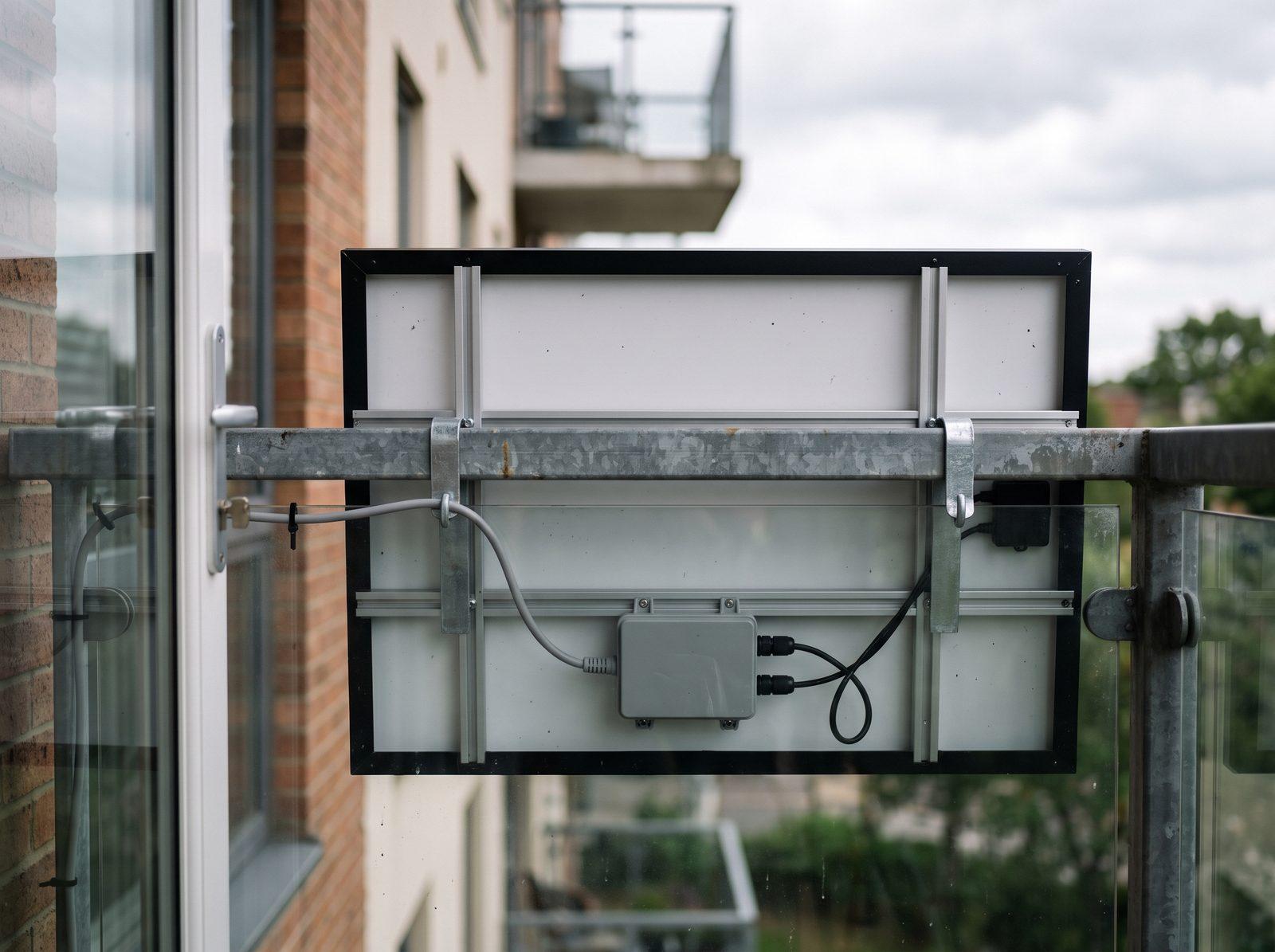
Solarfy sells two plug-in solar panel kits direct to UK homes: the single-panel Solo 455 from £359 and the two-panel Duo 910 from £509, with a frame in the box from £399 and £549. Both are on the ENA register, both come with free two-person delivery in Great Britain, and both are priced on how far the cable has to reach. We read Solarfy’s pages on 11 November 2026 and checked each kit against the register.
Our verdict
Of the in-stock kits we have checked, the Solo 455 at £399 is the cheapest register-listed kit with its own frame, and the Duo 910 at £549 is good value per panel watt. Solarfy’s track record is in Germany by its own account, and its UK kits were registered in September 2026, so lean on the register record and the 14-day return promise. Pick the Solo for a small garden or flat roof, the Duo if you have room for two panels, and the no mounting versions only if you already have a safe way to fix the panels.
Solarfy plug-in solar panels: what each option costs
Each kit comes in three cable options and with or without a flat mount. The cable choice is the solar DC cable between the panel and the microinverter, at 2m, 5m or 10m, with a 5m AC lead to the plug on top. That gives a reach from the socket to the panel of up to 5m, 9m or 14m, in Solarfy’s own wording. Dropping the mount takes £40 off every option.
| Kit and register reference | Reach | With flat mount | No mounting |
|---|---|---|---|
| Solo 455SOLAW/21640/V1 | Up to 5m (2m solar DC cable) | £399 | £359 |
| Solo 455SOLAW/21640/V1 | Up to 9m (5m solar DC cable) | £424 | £384 |
| Solo 455SOLAW/21640/V1 | Up to 14m (10m solar DC cable) | £449 | £409 |
| Duo 910SOLAW/21608/V1 | Up to 5m (2m solar DC cable) | £549 | £509 |
| Duo 910SOLAW/21608/V1 | Up to 9m (5m solar DC cable) | £574 | £534 |
| Duo 910SOLAW/21608/V1 | Up to 14m (10m solar DC cable) | £599 | £559 |
Prices as shown on Solarfy’s product pages on 11 November 2026, all variants available at that time. Delivery is free across Great Britain and not offered to Northern Ireland.
Solo 455 against Duo 910: which solar system?
The Solo has one 455W panel and the Duo has two. Both use a Hoymiles microinverter rated 800 VA, and Solarfy says the model is the one listed on the register, though it does not name it on the product page. At the base price the Solo costs 88p per panel watt and the Duo 60p, our arithmetic from the flat-mount prices. The microinverter caps the output at 800 VA either way, so the extra panel adds output in dull weather rather than a higher peak. Our guide to the 800VA limit explains why. The Duo costs £150 more than the Solo and needs room for two panels side by side.
What is in the box: the solar panel kit contents
For the Solo, per Solarfy’s listing: one 455W glass-glass monocrystalline panel measuring 1,762 by 1,134 by 30mm and weighing 22kg, a Hoymiles 800 VA microinverter, a 5m AC lead with a factory-fitted UK plug, one solar DC cable with Stäubli MC4 connectors, a flat mount for one panel, an accessories box and a printed guide. The Duo adds a second panel of the same size and a flat mount with four legs for two panels. Solarfy also offers a setup and registration guide with a video, a savings planner and a landlord letter template.
How plug-in solar panels work, and the rules for buying them
Plug-in solar panels are now available from shops and online sellers, and Solarfy is one of them. A plug-in solar system is plug-and-play solar: one or two solar panels (the Solo has a single solar panel), a microinverter and a lead that goes into a standard fixed wall socket. Each solar panel makes direct current, the microinverter turns it into mains electricity, and the solar power feeds your home’s circuit, so your energy use from the grid falls while the sun is out. These are not portable solar panels for camping. They stay put, and the size of the panels and your space matter more than a roof does.
The Department for Energy Security and Net Zero announced plug-in solar on 24 March 2026, and the regulations, SI 2026 No. 848, took effect on 27 August 2026. Under the current UK rules the output is capped at 800 VA, whatever the panel capacity, and in practice a household may connect one device. The permission covers Great Britain, and a plug-in battery is not allowed yet, so you cannot add a battery to a Solarfy kit. A plug-in system must be on the register, and you complete the UK plug-in solar registration yourself once it is running. If you want to install plug-in solar panels on a balcony, read the mounting limits below first. Solar panels can be installed by you, and a roof-mounted solar installation is a different job.
Are Solarfy plug-in solar panels on the register?
Both kits are on the register under Solarfy Ltd, and both were assessed Compliant at our 29 October 2026 snapshot. The Solo is SOLAW/21640/V1, model SFY-SOLO-455-BM, dated 25 September 2026. The Duo is SOLAW/21608/V1, model SFY-DUO-910-BM, dated 21 September 2026. Solarfy quotes the reference on each product page, which is the standard you should expect. Only kits on the register count as compliant for the plug-in route, and you register your own kit at myplugin.solar. Use our compliance checker or the certification tracker to check, and our G98 guide for the notification step.
Delivery, returns and warranty
- Delivery. Solarfy’s pages say free two-person delivery across Great Britain in five to eight working days. The company says it ships from a warehouse in Birmingham. Free delivery excludes Northern Ireland, where Solarfy says plug-in solar is not yet permitted.
- Returns. Solarfy lists 14-day returns. The product pages do not spell out the terms, so read them at checkout before you pay.
- Warranty. Solarfy states a 30-year warranty on the panels and 12 years on the Hoymiles inverter. These are Solarfy’s own claims, and a long warranty is only as good as the company that stands behind it.
- Sockets. The kit plugs into a fixed wall socket. Solarfy says no extension leads or adaptors, which is why it sells longer cables.
How much can you save with plug-in solar panels?
How much energy the panels make depends on the site, and when you are buying plug-in solar it pays to be sceptical of any single figure. Solarfy puts savings at £50 to £60 a year for the Solo and £100 to £120 for the Duo. Its assumptions are a south-facing, unshaded spot, about 325 and 650 kWh a year, 60 to 70% used at home and electricity at 26.32p per kWh. The government’s own estimate is £70 to £110, so the Solo claim sits below the bottom of that range and the Duo claim reaches above the top, which needs a good site. Our savings guide explains why shade and daytime use decide it, and the savings calculator works out your own figure.
Are plug-in solar panels safe to install?
Safety starts with the register: only a kit assessed Compliant counts, and both Solarfy kits are. To install plug-in solar panels you place them and plug in, with no installer, but the site still matters. Solarfy says the panels are for a garden, patio or flat roof and are not allowed on timber balconies or combustible cladding. It also says the plug goes into a fixed wall socket with no extension leads or adaptors. Each panel weighs 22kg, so secure the frame properly. If your wiring is old or you want a new outdoor socket, ask a qualified electrician first.
Are Solarfy plug-in solar panels worth buying?
A solar panel system this size suits a house with a garden, patio or flat roof and a fixed outdoor socket within reach, where you want the frame in the box and free delivery. The Solo is the one for small plots. Among plug-in solar options, the best plug-in solar for you is the one that fits your space, and the panels you buy should match the register entry. Solarfy says it is not allowed on timber balconies or combustible cladding, and with 22kg panels it is not a kit for a small balcony. Our guide for renters and balcony homes covers that case, and you need your landlord’s or freeholder’s permission either way. If you want a household name, look at the Octopus bundles, which include an export tariff for Octopus customers.
Plug-in solar panels or rooftop solar panel systems?
Rooftop solar panel systems need an installer and a roof, and Octopus’s installed rooftop solar starts at £6,663 for two panels with no battery, at April 2026 prices. A plug-in solar panel kit costs a fraction of that, but it is capped at 800 VA and you only save on the energy you use as it is generated. The government estimates £70 to £110 a year off your energy bills. Ask your energy supplier about export payments, and see our SEG without MCS guide for why a kit with no installer usually earns none.
Where to buy plug-in solar panels besides Solarfy
Prices were read on the dates shown. Every kit is on the ENA register, and delivery terms differ, so compare the final checkout price. Per panel watt is our arithmetic from the stated price and the panel wattage.
| Kit | Price | Per panel watt | What you get | Read on |
|---|---|---|---|---|
| Solarfy Solo 455, flat frame | £399 | 88p | One 455W panel, frame, free two-person delivery | 11 Nov |
| Voltacon 800W kit, two 465W panels | £399 | 43p | No mount, free delivery | 11 Nov |
| Octopus single panel bundle | £450 | 98p | One 460W panel, wall or ground mount, delivery included | 11 Nov |
| Solarfy Duo 910, flat frame | £549 | 60p | Two 455W panels, frame, free delivery | 11 Nov |
| PatioSun Lite | £449 | 101p | One 445W bifacial panel, fold-out ground stand, free mainland delivery | 2 Nov |
| Thunder Bolt Max 530W, flat roof brackets | £449.99 | 85p | One 530W panel with no-drill brackets, free delivery | 2 Nov |
Voltacon’s two-panel kit is cheaper per watt, but it has no mount, so it is a price for panels and an inverter only. For every compliant kit by delivered price, see our best kits guide, the 800W kit list and our cost guide. If you would rather buy through Amazon, Modular Solar’s 340W and 475W units are on the register and sold there. We do not print Amazon prices. Check price on Amazon
Questions about Solarfy plug-in solar kits
Who is Solarfy and is it on the ENA register?
Solarfy Ltd has two kits on the ENA register, SOLAW/21640/V1 for the Solo 455 and SOLAW/21608/V1 for the Duo 910, both assessed Compliant as at our 29 October 2026 snapshot. Solarfy says it ships from a warehouse in Birmingham and that its team has sent 10,000 or more orders to German households since 2022. We have not tested a kit.
How much does the Solarfy Solo 455 cost?
£399 with a flat mount and a 2m solar cable on 11 November 2026. A 5m cable costs £25 more and a 10m cable £50 more. Without a mount the same three options cost £359, £384 and £409.
How much does the Solarfy Duo 910 cost?
£549 with a flat mount and a 2m solar cable, £574 with a 5m cable and £599 with a 10m cable. The no mounting versions cost £509, £534 and £559.
Is Solarfy's plug-in solar on the ENA register?
Yes. Solarfy quotes the register reference on each product page. The Solo is SOLAW/21640/V1, model SFY-SOLO-455-BM, and the Duo is SOLAW/21608/V1, model SFY-DUO-910-BM, both Compliant at our 29 October 2026 snapshot of the register.
How long does Solarfy take to deliver?
Solarfy's product pages say five to eight working days, with free two-person delivery across Great Britain and none to Northern Ireland. Each panel weighs 22kg, so have a second person ready on the day.
Can I return a Solarfy kit?
Solarfy says it offers 14-day returns. Its page does not say who pays for return carriage or whether an opened kit qualifies, so read the full terms at checkout before you order.
Are plug-in solar panels worth it?
They can be, on a good site. The government estimates £70 to £110 a year off your energy bills, and a Solarfy Solo at £399 would take about 3.6 to 5.7 years to pay back on that range, our arithmetic from the flat-mount price. Shade, direction and how much you use in the daytime decide it.
Are plug-and-play solar panels legal in Great Britain?
Yes, if the kit is assessed Compliant on the ENA register, and the permission covers Great Britain, not Northern Ireland. Both Solarfy kits were Compliant at our 29 October 2026 snapshot. In practice a household may connect one device.
Can I add a battery to a Solarfy kit?
No. The rules do not allow a battery on the plug-in route yet, so a solar and battery setup needs an installer and a different design. Plug-in batteries are not part of this route yet.
Can I get paid for exporting electricity from a plug-in solar panel system?
Usually not. Smart Export Guarantee tariffs ask for installer certification, which a self-installed kit lacks. Ask your energy supplier, and see our SEG without MCS guide.
Does the Solarfy kit work on a balcony?
Solarfy sells it for a garden, patio or flat roof, and says it is not allowed on timber balconies or combustible cladding. Each panel is 1,762mm by 1,134mm and weighs 22kg, so check your space and your freeholder's permission first.
Related reading
Best Plug-in Solar Kits UK: Prices and Mounts
Compare verified plug-in solar kits for a UK balcony, wall or garden by price, panel rating, mount and retailer. Check the full cost and likely savings.
800W plug-in solar kits: every verified kit
Every 800W plug-in solar kit verified on the ENA register, the microinverters inside them, which you can buy now with prices, and what the 800W limit means.
Plug-in Solar Kits UK: The ENA Approved Register
Every plug-in solar kit on the ENA register, for a balcony, wall or garden. Verified or under review, with the reference, where to buy, and the check date.
Octopus Plug-In Solar Kits: £450, Now ENA Compliant
Octopus sells £450 and £650 plug-in solar bundles, and its M1-800-E is now Compliant on the ENA register. Delivery dates, what to check on the label, and OVO's plan.