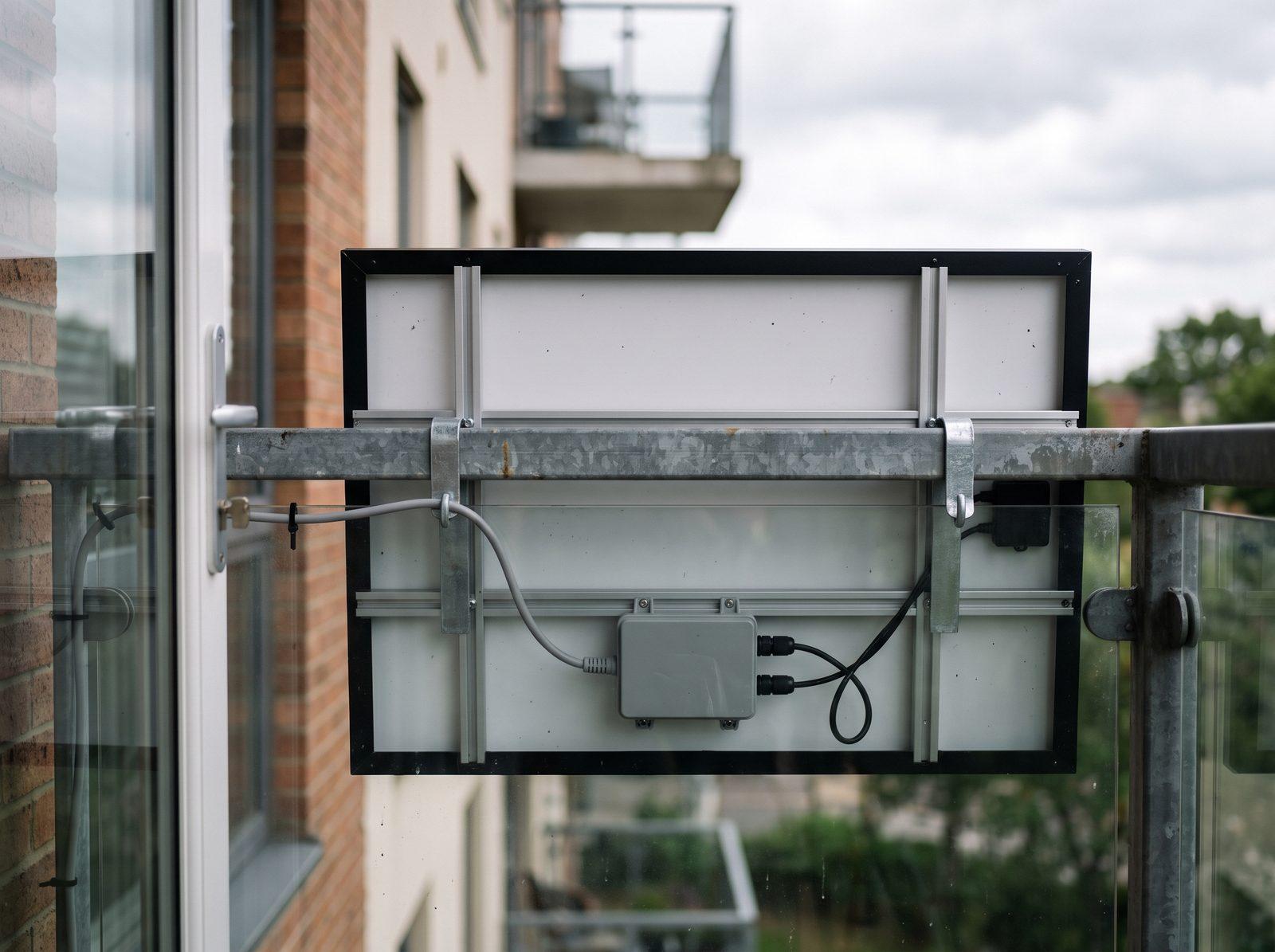
Octopus Energy sells two plug-in solar bundles: one 460W solar panel for £450, or two for £650, with VAT and kerbside delivery in the price. On 11 November 2026 the plug-in solar page said the bundles were back in stock and that Octopus was aiming to deliver orders by the end of November. This review looks at the kit as a buyer would, not as news. It covers what is in the box, whether the kit is on the register, what the export tariff means for your energy bill and who should pick something else.
Our verdict
A sound solar system from a name you know, with a register record and an export tariff no other supplier offers on a plug-in kit. It is not the cheapest way in. The Solarfy Solo 455 was £399 with a frame on the day we looked, and the delivery date is only an aim. Buy it if you already take Octopus as your energy supplier and want the export option. If you are only after the lowest price per panel watt, look at the alternatives table first.
What you get for £450 or £650
Both bundles use the same parts, per the product pages. Each solar panel is a JA Solar 460W N-type TOPCon bifacial module, 1,762 by 1,134mm and 22kg, with a product guarantee of 25 years. One Fox ESS microinverter handles up to two panels, with a quoted efficiency of up to 96%, an IP67 rating and monitoring through the Fox ESS app. Octopus customers can also watch solar generation in the Octopus Energy app, per the explore page. A 5m cable with a three-pin plug connects the inverter to an outdoor socket, and the mounting kit is wall or ground, your choice. Unlike a rooftop solar installation, there is no installer, scaffold or survey. For scale, Octopus’s own installed rooftop solar starts at £6,663 for two panels with no battery, at April 2026 prices.
| Bundle | Panels | Price | Per panel watt | Delivery |
|---|---|---|---|---|
| Single panel bundle | 1 × JA Solar 460W | £450 with VAT and delivery | 98p | Kerbside, 90kg pallet |
| Two panel bundle | 2 × JA Solar 460W | £650 with VAT and delivery | 71p | Kerbside, 112kg pallet |
Prices are the launch prices on Octopus’s bundle pages, read 11 November 2026. Octopus’s main plug-in solar page shows pricing after you enter a delivery address, so confirm it there. Per panel watt is our arithmetic: price divided by the panel wattage in the bundle.
Both panels connect to one microinverter, and only one cable runs to the socket. The rated output stays capped at 800 VA however many panels you add, which our guide to the 800VA limit explains.
Is the Octopus kit on the ENA register?
Octopus says its plug-in solar system has been assessed by the Energy Networks Association and deemed compliant. The register agrees in part. It holds one Octopus record under the Plug-in Solar type: the M1-800-E, reference OCTOQ/21124/V1/A5, assessed Compliant and dated 8 September 2026, as at our 29 October snapshot. That is the register position you want before you buy.
What we cannot confirm is the match. The pages describe the inverter only as a Fox ESS microinverter and give no model number or register reference, so we cannot tie the bundle to the M1-800-E from the listing. Only kits on the register count as compliant for the plug-in route, so check the label on the unit that arrives against the record, and register it on the ENA site before you plug in. Our certification tracker and the compliance checker show you how. For the story of how the record appeared, vanished and returned, see our news report on Octopus’s plug-in kits.
The export tariff and SEG: what it means in practice
This is the reason to pick this kit over a cheaper one. The explore page says you can sign up for an export tariff if three things are true: you bought the bundle from Octopus, Octopus is your energy supplier and you have a working smart meter. You cannot set it up when you order. Once the solar panels arrive you register the system on the ENA site, wait for your network operator to approve it and then tell Octopus. Any extra generation goes back to the grid and earns export payments.
- Outgoing Octopus pays 12p for every unit exported and is a variable tariff, per the Outgoing page on 11 November 2026. Prime Outgoing pays 16p between 4pm and 7pm and 9p the rest of the day.
- Agile Outgoing follows half-hourly wholesale prices. Octopus says it suits people with energy storage, so it is a poor fit for a kit with no battery.
- The Smart Export Guarantee (SEG) tariff pays 4.1p and needs MCS or Flexi-Orb certification, so it is not a realistic route for a self-installed kit.
- Another supplier or another retailer. Buy from Octopus and stay with another energy supplier and you arrange export with that supplier. Buy a kit from another retailer and you are not eligible for an Octopus export tariff for that system.
Keep the numbers modest. A plug-in kit mostly cuts your energy bill with power you use while it generates, and little is left over to export, so the 12p export rate is a small extra. Octopus puts total savings at £50 to £150 a year including export, and the government’s estimate is £70 to £110 a year. Our Octopus Outgoing guide sets out every tariff, the SEG without MCS guide compares suppliers and our savings calculator gives a figure for your own spot.
Delivery, returns and fitting it
The main page says orders placed now are aimed at the end of November, and that Octopus will confirm a date by contact. The bundle pages still quote end of September to mid October and the explore page repeats end of September in one place, so the dates disagree. Treat end of November as the figure to plan around.
- Delivery. Kerbside on a pallet of about 1.8m by 1m by 1.2m, weighing 90kg for one panel and 112kg for two. Have two people ready, and check hallways if you live in a flat.
- Returns. You can return the bundle within 14 days of receiving it, but a £60 collection fee comes off your refund. A bundle that has been opened, installed or used cannot be returned if you have only changed your mind.
- Ground mount. Each mount weighs 7.5kg and needs ballast such as bricks or slabs, which is not included.
- Wall mount. For a solid wall such as brick only, with six brackets per panel and a drill. Octopus calls it trickier than the ground mount and not for wooden fences, gates, walls, enclosures or balconies.
- Socket and notification. Plug into a weatherproof outdoor socket, never an extension lead, and notify your network operator. Our G98 guide walks through it.
Who the Octopus kit suits, and who should skip it
It suits an Octopus customer with a smart meter, a south-facing garden, patio or solid wall and room for 1.8m panels, who wants the export tariff and does not mind waiting for delivery. It is also a sensible pick for anyone who wants a household name behind a kit and will pay a little extra for it.
Skip it if you rent or have a small balcony. Octopus says compact panels arrive in Spring 2027 and rules out balconies under permitted development. Our renters’ guide covers that case. Skip it too if price per watt matters most, or if you want a home battery. There is no confirmed date for a plug-in battery, and battery storage needs an electrician to connect under the current rules, so solar and battery together is a different job.
Octopus against the alternatives
Prices below were read on 11 November 2026. Every kit is listed on the ENA register under the reference shown, and delivery terms differ, so compare the final checkout price.
| Kit | Price | Per panel watt | What you get | ENA reference |
|---|---|---|---|---|
| Octopus single panel bundle | £450 | 98p | One 460W panel, wall or ground mount, delivery included | OCTOQ/21124/V1/A5 (Octopus does not name its model) |
| Solarfy Solo 455 | £399 | 88p | One 455W panel, flat frame, free two-person delivery | SOLAW/21640/V1 |
| Solarfy Duo 910 | £549 | 60p | Two 455W panels, flat frame, free delivery | SOLAW/21608/V1 |
| UKSOL Pro Duo 890W hybrid mount at Argos | £849 | 95p | Two 445W panels and a ground or wall frame; delivery shown at checkout | UKSOL/21007/V1/A3 |
| Octopus two panel bundle | £650 | 71p | Two 460W panels, wall or ground mount, delivery included | OCTOQ/21124/V1/A5 (Octopus does not name its model) |
Octopus is not the cheapest per watt. Its two panel bundle, at 71p, sits between Solarfy’s Duo at 60p and Argos’s UKSOL Duo at 95p, and its price includes delivery. For a full price comparison, see our best balcony solar kits guide, our 800W kit list and the reviews of UKSOL’s range.
Two other routes are worth a look. Modular Solar’s 340W and 475W units are sold on Amazon UK and are on the register; we do not print Amazon prices. Check price on Amazon And if you want storage now rather than in 2027, EcoFlow’s STREAM Ultra X is a home battery. That is a different installation from a plug-in kit and needs an electrician. See EcoFlow STREAM
Questions about the Octopus plug-in solar kit
Is the Octopus plug-in solar kit any good?
On paper, yes. It uses full-size JA Solar 460W bifacial panels, a Fox ESS microinverter and a wall or ground mount, and Octopus is the one supplier that ties a kit to an export tariff. The weak points are delivery, which Octopus says it is aiming for the end of November, and a returns fee of £60. We have not tested one.
How much does the Octopus plug-in solar kit cost?
Octopus's bundle pages show launch prices of £450 for one panel and £650 for two, both including VAT and delivery, as at 11 November 2026. Its main plug-in solar page says you enter a delivery address to see pricing, so confirm the figure at checkout.
Is the Octopus plug-in solar kit on the ENA register?
Octopus says its system has been assessed by the ENA and deemed compliant. The register has one Octopus record, the M1-800-E, reference OCTOQ/21124/V1/A5, assessed Compliant and dated 8 September 2026 (snapshot of 29 October). Octopus's pages name no model or reference, so check the label on your kit against that record.
Can I get paid for the electricity I export with an Octopus kit?
Possibly. Octopus says you can sign up for Outgoing if you bought the kit from Octopus, Octopus supplies your electricity and you have a working smart meter. You must first register the kit on the ENA site and wait for your network operator's approval. Octopus's Outgoing tariff pays 12p per kWh, and a plug-in kit exports little, so treat it as a small extra.
Does the Octopus Smart Export Guarantee tariff work with plug-in solar?
Not in practice. Octopus's SEG tariff pays 4.1p per kWh but asks for MCS or Flexi-Orb certification, which a self-installed kit does not have. Octopus also says a kit bought from another retailer cannot get any Octopus export tariff.
Can I use an Octopus kit on a balcony?
Octopus says its plug-in solar cannot be installed under permitted development on wooden fences, gates, walls, balconies or enclosures. The panels are around 1.8m by 1.1m and weigh 22kg each, so check the space and your freeholder's permission before you order.
Can I add the Octopus Nook battery to the kit?
Not yet. Octopus says plug-in batteries may arrive in early 2027 and has not given a confirmed date. Under the current rules a device with a battery is outside the plug-in route and needs an electrician to connect it.
Related reading
Octopus Plug-In Solar Kits: £450, Now ENA Compliant
Octopus sells £450 and £650 plug-in solar bundles, and its M1-800-E is now Compliant on the ENA register. Delivery dates, what to check on the label, and OVO's plan.
Octopus Outgoing 2026: Export Rates, Prime, SEG and Plug-in
Outgoing Octopus pays 12p, Prime 16p at peak and the export-only SEG 4.1p. Checked 8 Oct 2026: who qualifies, what happened to Outgoing Fixed, the plug-in rule.
Plug-in Solar Kits UK: The ENA Approved Register
Every plug-in solar kit on the ENA register, for a balcony, wall or garden. Verified or under review, with the reference, where to buy, and the check date.
Best Plug-in Solar Kits UK: Prices and Mounts
Compare verified plug-in solar kits for a UK balcony, wall or garden by price, panel rating, mount and retailer. Check the full cost and likely savings.